
Guidance
The Complete Gear List
This isn’t a generic packing checklist - it’s what our own guides actually recommend, with the reasoning behind each item, based on years of leading these exact routes.
Head & Hands
Warm hat / beanie
Traps heat at your head and ears - the fastest place to lose body heat at altitude. A fleece or wool beanie is enough for most routes.
Sun hat
UV exposure is intense above the treeline. A wide-brim hat with neck coverage prevents burns on long exposed ridgelines.
Fleece gloves
For general warmth during normal trekking hours - breathable enough to wear most of the day.
Insulated mitts
For summit mornings and high camps where fleece gloves alone won't cut it. Mitts trap more heat than gloves by keeping fingers together.
Sunglasses (UV protection)
Snow blindness is a real risk above 4,000m. Category 3–4 lenses with side coverage are recommended, not standard fashion sunglasses.
Headlamp + spare batteries
Essential for early starts (Kala Patthar, Poon Hill sunrise climbs) and teahouses with limited electricity. Cold drains batteries fast - always carry a spare set.
Upper Body
Base layer tops (synthetic or wool)
Worn directly against skin to wick sweat away. Avoid cotton - it holds moisture and takes forever to dry at altitude, leading to chill.
Fleece jacket
Mid-layer insulation for cool mornings and evenings at lower elevations.
Down jacket
Your primary defense against high-altitude cold. Look for at least -15°C comfort rating for treks above 4,000m.
Waterproof shell jacket
Blocks wind and rain - even in dry season, afternoon weather at altitude can shift fast.
Trekking t-shirts (2–3)
Quick-dry synthetic shirts for daytime hiking at lower, warmer elevations.
Lower Body
Base layer bottoms
Thermal leggings worn under trekking trousers on cold mornings and at high camps.
Trekking trousers
Durable, quick-dry, and ideally with zip-off legs for temperature flexibility during the day.
Waterproof shell trousers
Paired with your jacket for full rain and wind protection on exposed sections.
Feet
Waterproof hiking boots (broken in)
The single most important gear decision. Never bring brand-new boots - blisters from unbroken boots end more treks than any other single cause.
Trekking socks (wool or synthetic blend)
Cushioned, moisture-wicking socks reduce blister risk significantly compared to cotton.
Camp shoes / sandals
Lightweight shoes to let your feet breathe and recover at teahouses after a day of hiking.
Gaiters
Keep snow, mud, and debris out of your boots on higher, snow-exposed sections of trail.
Sleep & Camp
4-season sleeping bag (-15°C to -20°C rated)
Teahouse rooms are unheated and can drop well below freezing at night in high-altitude villages, even when blankets are provided.
Sleeping bag liner
Adds warmth, keeps your bag cleaner over a multi-week trek, and dries faster than a full sleeping bag if it gets damp.
Insulated sleeping pad
Not always necessary in teahouses with proper beds, but valuable on routes with more basic accommodation or if you run cold.
Essentials
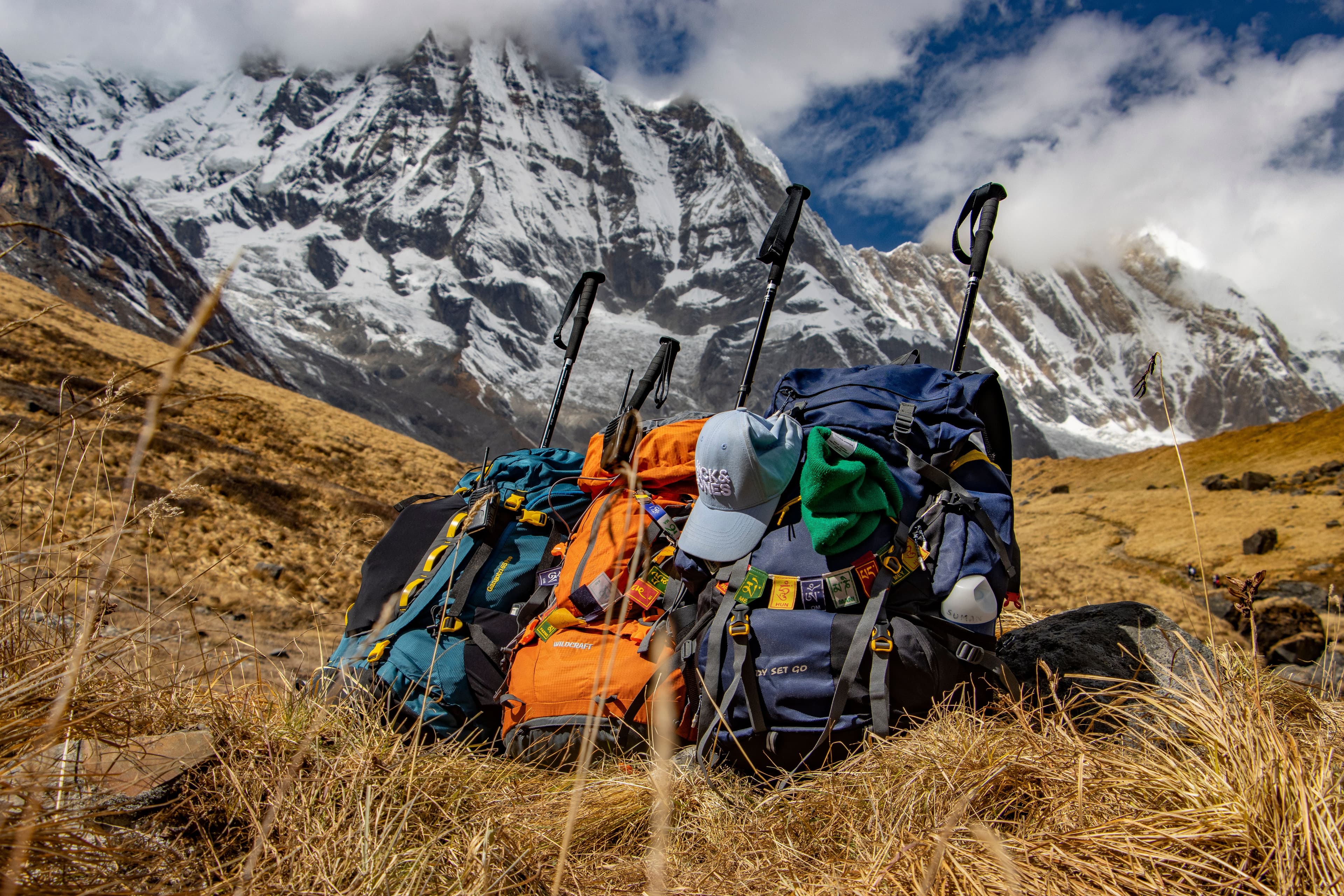
Trekking poles
Reduce knee strain significantly on long descents - Everest Base Camp alone involves thousands of meters of cumulative descent.
Daypack (30–40L)
For carrying your daily essentials while your porter carries the bulk of your gear between teahouses.
Reusable water bottles (2L capacity total)
Hydration needs increase significantly at altitude - aim for 3–4 liters of water per day.
Water purification tablets or filter
Boiled or filtered water is provided, but tablets are a reliable backup, especially on longer, more remote routes.
Basic first-aid kit
Blister care, pain relief, and any personal medications. Your guide carries a comprehensive kit, but personal basics matter too.
Sunscreen (SPF 50+) and lip balm with SPF
UV exposure at altitude is far more intense than at sea level - sunburn happens fast even on cool, cloudy days.
Power bank
Cold drains phone and camera batteries quickly, and charging at teahouses often costs money per device, per hour.
Health & Personal
Personal medications
Bring enough for your full trip plus a few extra days, in original labeled packaging in case of any customs questions.
Hand sanitizer and wet wipes
Shower access is limited or cold on most routes - these keep you reasonably clean between proper washes.
Diamox (acetazolamide), if prescribed
Commonly used preventatively for altitude sickness - consult your doctor before your trip, not on the trail.
Earplugs
Teahouse walls are thin, and dorm-style rooms are common on some routes - small comfort item that makes a real difference to sleep quality.
Renting Gear in Kathmandu
If this is a one-time trek, most technical items - down jackets, sleeping bags, trekking poles - can be rented affordably in Thamel. We can point you to the shops we trust once you arrive.
Questions about specific gear for your trek? Contact us →